In the shadowy corners of cinema, few films dare to peel back the glossy facade of the pharmaceutical industry quite like Scanners 3: The Takeover (1992). Directed by Christian Duguay, this cult sci-fi horror sequel isn’t just a tale of psychic mayhem—it’s a chilling allegory for an industry run amok, where miracle drugs hide monstrous side effects, and corporate greed births unintended horrors. As a movie critic, I’ve seen my share of dystopian nightmares, but this one hits close to home, mirroring real-world scandals where Big Pharma prioritizes profits over people. Through the lens of its protagonist, Helena Monet, the film paints a grim picture of how unchecked drug development can erode morality, amplify human suffering, and pave the way for total domination. Let’s dive into this dark narrative, where the line between cure and curse blurs into oblivion.
At its core, Scanners 3 is a stark warning about the hidden dangers lurking in everyday medications. The story revolves around Ephemerol, a drug originally marketed as a breakthrough treatment for ADHD. Sounds familiar? In our world, we’ve seen similar promises with drugs like Ritalin or Adderall, touted as focus enhancers for restless minds. But in the film, Ephemerol doesn’t just calm hyperactivity—it unleashes telepathy and telekinesis in the children who survive its trials. These “scanners,” as they’re called, gain god-like powers, but at a devastating cost. The drug amplifies ambient “noise”—the mental chatter of the world around them—turning everyday life into a cacophony of headaches, anxiety, and unfocused torment. It’s no coincidence that these symptoms mirror ADHD itself: lack of focus, overwhelming sensory input, and social isolation. Scanners can’t hold down jobs, they freeze up in crowds, and they retreat into lonely existences, much like how real adverse drug reactions can trap people in cycles of dependency and despair.
The film doesn’t stop at individual suffering; it escalates to societal chaos, exposing how pharma companies sweep side effects under the rug. Follow-up drugs are rushed to market to “control” the scanners, sedating their powers while further dulling their consciences—the very moral compass that society constructs to distinguish right from wrong. Helena, our anti-heroine played with icy intensity by Liliana Komorowska, embodies this erosion. She’s told by her pharmaceutical researcher friend that she’s “not normal,” a label that echoes the stigmatization faced by those with mental health issues or rare drug-induced conditions. Helena knows it all too well: she moves objects with her mind, compels people to act against their will, and spirals into a quest for world domination. Her plan? Hijack satellite networks to broadcast her influence globally. It’s a metaphor for how pharma giants extend their reach, patenting life-altering substances and lobbying for policies that prioritize market share over safety.
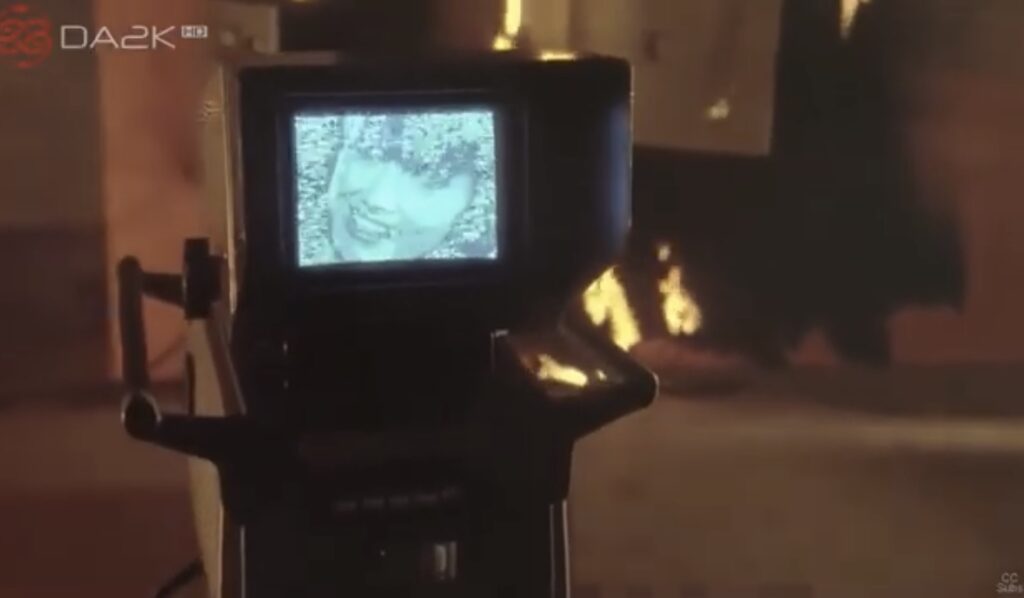
One of the film’s most haunting elements is the scanners’ dual nature. In moments of peace, they’re crippled by their amplified sensitivities, but when cornered or enraged, their “ADHD” vanishes, replaced by laser-focused destruction. They become “killing machines,” obliterating enemies with precision. This Jekyll-and-Hyde dynamic critiques how drugs can suppress empathy, turning vulnerable individuals into unwitting weapons. As one character quips, “You know what they say, the minute they look at you, they can read your mind.” It’s a line that chills because it speaks to the invasion of privacy and autonomy that comes with mind-altering meds—think of the real debates around psychotropics that alter behavior without fully understanding long-term risks.
The movie pulls no punches on ethical lapses in drug testing. Interestingly, there are no “scanner lab rats” in the story’s Western setting—human experimentation is deemed unethical and immoral here. But the script slyly nods to places like China, where such boundaries are blurrier, hinting at global disparities in pharma ethics. We’ve seen echoes in reality: offshore trials in developing countries, where regulations are lax and vulnerable populations become guinea pigs for Western profits. Helena’s backstory amplifies this horror. As a child, she was institutionalized in an asylum that’s now a secret holding pen for scanners. Returning as an adult, she confronts her old psychiatrist, torturing him in a twisted role reversal—recording the session as if he’s the lab rat now. It’s a visceral scene of revenge, underscoring how childhood trauma from experimental treatments can breed monsters.
Enter Eph-3, Helena’s “new drug” pitched as a savior to fellow scanners: it promises to silence the voices and headaches that plague them. She breaks them out of the asylum, doses them, and recruits them into her fold. They become her loyal army, relaxed and empowered, but at what price? The film’s main theme song, with its refrain “there is no sitting on the fence,” drives home the all-or-nothing stakes—either submit to the drug’s control or suffer endlessly. But Eph-3’s side effects soon unravel Helena. In a bizarre, undressed whirlpool scene, she lures her father in for a discussion, only to drown him in a fit of unhinged rage. The drug strips away her inhibitions, turning familial bonds into casualties. This descent into madness culminates in a breakdown, where she obsessively watches videos of her dead dad, regretting actions she barely comprehended under the influence.
Helena’s ambition knows no bounds, mirroring the pharma industry’s predatory expansion. After killing her father, she seizes control of her company, Monet Pharmaceuticals, firing the board in a power grab. Her “game plan”? Eliminate capitalist competition to forge a monopoly, diversify into new areas, and dominate all markets. Sound like Big Pharma’s playbook? Think mergers like Pfizer and Allergan, or the opioid crisis where companies flooded markets with addictive painkillers. Helena even integrates AI into R&D, her assistant crunching company reports, financials, earnings, and assets in a mere 29 seconds. It’s a nod to how tech accelerates drug development, often outpacing ethical oversight.
The film’s darker thrills come from Helena’s misuse of power for personal amusement and testing. She hijacks live streamers, forcing a couple to make out on a talk show or implanting her thoughts into their heads to broadcast her agenda. To push her telekinesis limits, she torments her boyfriend, making him burn himself with a cigar over a live camera—repeatedly. Later, she takes over 57 TV stations from her boss, Mark Dragon (the “takeover king”), compelling him to grab his own balls and leap to his death into an empty pool. “I must say, you do have balls. Now hang on to them,” she sneers. It’s grotesque, but it symbolizes how pharma execs “hang” on power while destroying lives.
Even Helena’s brother, Alex, falls victim to the web of deceit, framed for rape in a setup at the asylum. It’s a subplot that highlights institutional abuse, where scanners are manipulated and discarded. By the end, Helena’s fractured psyche reveals the ultimate toll: the scanners’ dream of a “new world order” crumbles under the weight of their own creations. They seek global control, but the drugs that birthed them ensure their downfall.
Scanners 3: The Takeover isn’t flawless—its B-movie effects and over-the-top plot twists scream early ‘90s schlock. But as a critique, it’s prescient and pitch-black. In an era of vaccine hesitancy, antidepressant controversies, and biotech booms, the film warns of an industry where drugs don’t just heal—they reshape humanity, often for the worse. If Helena’s rise teaches us anything, it’s that when pharma goes unchecked, the side effects aren’t just personal; they’re apocalyptic. Watch it if you dare, but remember: the real horror might be in your medicine cabinet.