Everything Is Connected, Whether You Like It or Not
The pilot episode of Impulse Reinterpret opens with an image that does not announce its significance until you sit with it: Dominic teleports into a New York City subway car and drenches everyone in it with seawater. He arrived from somewhere vast and open — an ocean, a coastline, another world entirely — and the evidence of that other world spills out across ordinary commuters who have no framework for what just happened to them. They are soaked by a reality they cannot see and were never supposed to touch.
The episode uses this moment to establish something it will spend its entire run developing: teleportation is not a personal phenomenon. It is not a private transaction between one extraordinary person and the space they move through. It is a disruption that propagates outward, touching everyone in range, reordering the ordinary without permission or apology. The parallel the show is drawing is precise and deliberate — globalization works the same way. A conflict on the other side of the world drives up your gas prices. A financial collapse in one country empties grocery shelves in another. A war you were never part of arrives in your kitchen, in your wallet, in the specific quality of anxiety that has become the background radiation of modern life. Nobody asked to be connected this way. Nobody voted on it. The seawater is already on your clothes.
Teleportation in this series is not a fight between two individuals. It is a war that touches everyone in the room. The pilot makes this clear from its opening minutes and does not relent.
Transients
Henry and her mother Cleo do not stay anywhere long enough to call it home.
Six months is the ceiling. After that, something shifts — Cleo’s restlessness, the wrong boyfriend, the logic of perpetual motion that has governed their lives for as long as Henry can remember — and they move again. New town. New school. New set of faces to learn and then leave. It is, the episode notes, not entirely unlike the life of someone on a visa or a work permit, perpetually present in a place on a temporary basis, never fully authorized to belong.
The difference is that visa holders often choose this. Henry has never chosen anything about it.
She has learned to travel light in every sense — materially, emotionally, relationally. Getting attached is something that happens to other people. Having a history in a place, a reputation, a sense that the hallways of a school belong to you in some small way — these are luxuries that require more than six months to accumulate. Henry moves through each new location like someone who knows the checkout date before they have finished unpacking.
The pilot drops them in Reston, New York. It looks like everywhere else they have been. Henry knows how to read a new place within hours — who holds power, where the exits are, what the social terrain demands of a newcomer. She has done this enough times that it is no longer interesting, only necessary.
The New School
The high school in Reston runs on the particular social physics that every American high school runs on — athletic achievement as the primary currency of status, conformity as the baseline expectation, and the quiet, constant pressure on anyone who does not perform enthusiasm for the institution to explain themselves.
A football player approaches Henry in that practiced, self-satisfied way of someone who has never had to try very hard. He notes, with a grin designed to communicate that he is doing her a favor by noticing her at all, that she is not wearing her spirit bracelet.
Henry looks at him.
“Oh,” she says. “I left it in the trash.”
The pilot could not have chosen a better first line for her. It establishes everything in four words: she is not interested in performing participation. She is not going to soften her edges to make the social machinery run more smoothly. She has been the new girl enough times to have given up on the pretense that these rituals are worth engaging with. The spirit bracelet is in the trash because that is where she has mentally filed the entire apparatus of compulsory school spirit, and she sees no reason to pretend otherwise.
While the school funnels its energy into a pep rally — the gymnasium filling with choreographed enthusiasm for a football team she will never watch — Henry is in the bathroom. Smoking. Listening to some administrator deliver an intercom speech designed to manufacture communal feeling, and mocking every word of it in the mirror. There is something deeply, specifically satisfying about that image: the girl who has seen twenty versions of this same school watching her own face in the mirror and giving the speech back to itself in the register it deserves.
What Happens to Townes in That Classroom
Townes is autistic in a school that has not decided to treat that as anything other than a problem to be managed or, when the teacher is feeling particularly uncharitable, a performance to be mocked.
The classroom scene is difficult to watch and is meant to be. The teacher — a man who insists on the honorific Doctordespite credentials that do not support the title — uses Townes as an example of what happens when you fail to meet the room’s expectations. The students, taking their cues from the person in authority, follow. The verbal and emotional targeting is the kind that leaves no physical marks and is therefore, in the accounting systems of schools, technically permissible.
Townes sits inside it. He does not have the social tools to deflect what is happening to him. He does not have the neurotypical reflexes that allow other students to laugh it off or redirect or perform indifference. He simply receives it, which is worse than anything his tormentors understand themselves to be delivering.
And then Henry speaks.
She calls the teacher by his first name — Shelley — which snaps something to attention in the room immediately. Then she methodically, quietly, and with devastating precision dismantles his authority using only publicly available information: his post-graduate work at the University of Cincinnati, the master’s dissertation published online, the absence of any doctoral dissertation in the record. She has looked him up. She found what she was looking for, or more precisely, what she was not looking for. Your master’s is there. It’s a rambling piece of shit. It’s just odd I couldn’t find your dissertation.
The teacher has been building his authority on a credential he does not possess, in a room full of students who had no reason to check. Henry checked. She checked because she has learned, through the experience of moving through dozens of social environments where she had no existing allies, that the fastest way to neutralize a threat is to find the structural weakness in whatever the threat is using to make itself large.
She is not performing courage. She is being efficient.
The First Time It Happens
Henry’s first brush with teleportation does not arrive with orchestral music or a dramatic slow-motion reveal. It arrives as a seizure — messy, physical, frightening, the kind of thing that happens to a body under extreme stress and announces itself with the chaotic specificity of a nervous system overloading.
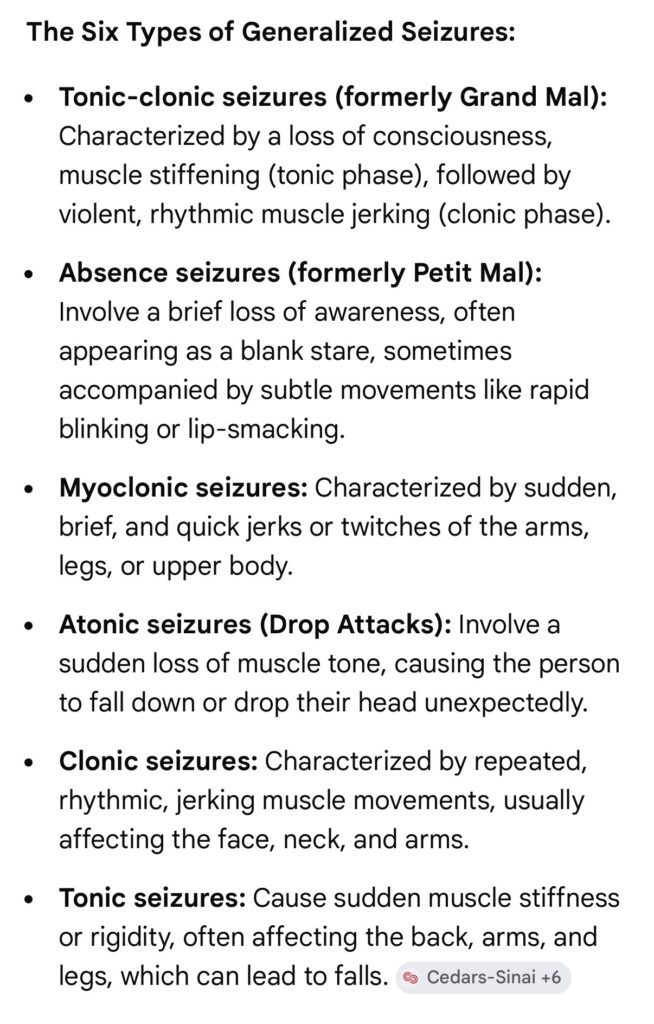
The altercation with the teacher escalates. Something in Henry’s physiology responds. And then the things around her begin to behave strangely: her hair standing up as though the air has been electrified, pens moving on desks without being touched, the ordinary objects of the room making small, inexplicable gestures of response to whatever is building inside her.
The pilot is careful here. It does not over-explain. It simply shows the phenomenon and allows the audience to sit in the same bewilderment as everyone else in the classroom. Something is happening to this girl. Nobody has the language for it yet. The series is going to spend its entire run building that language, piece by piece.
What is not bewildering, and what the pilot treats with the matter-of-fact darkness it deserves, is the absence of medical support around this. Because Cleo and Henry move constantly, Henry’s seizure history has never been properly documented or treated. There is no consistent physician. No medication that has been properly calibrated over time. No access to her father’s medical history — whoever her father is, whatever he passed down through genetics — because that information, like so much else about her origins, is simply not available to her. She has seizures at home. She manages them alone. This is the healthcare of people who move too often to be caught by the safety nets that only work if you stay in one place long enough to fall into them.
The pilot notes, in passing, that there were doctors in the past willing to bend the rules for Henry — willing not to file with the DMV so she could keep her driver’s license while on seizure medication. This small detail carries significant weight. It tells you what kind of life they lead: one where even basic medical accommodation requires finding someone willing to look the other way, where the systems that are supposed to help them require a stability they cannot provide.
Cleo and the Pattern
Henry has watched her mother long enough to have mapped the cycle with the accuracy of someone who has lived inside it as a consequence.
Cleo finds a man. The man becomes, in Cleo’s emotional accounting, something close to a solution — to loneliness, to instability, to the particular exhaustion of being a single mother in perpetual motion. She narrows the gap between new boyfriend and Henry’s father figure faster than the timeline justifies. She makes pronouncements: there have to be consequences, we made a decision together. She invests the relationship with a weight it has not earned and usually cannot bear. And then the relationship fails, or Cleo decides it has run its course, and they pack and move and the whole process resets.
Henry is not angry at her mother in the way that requires dramatic confrontations. She is tired. This is a different and more corrosive emotion — the fatigue of someone who has watched the same mistake repeat enough times that they have run out of the energy needed to react to it. She knows how this conversation ends. She has had a version of it every six months for years. She sits inside it and waits for it to be over.
Bill Boone, Pillar of the Community
Bill Boone is the kind of man that small towns build myths around and journalists eventually dismantle.
He runs an auto dealership. He is visible in the community — present at events, connected to local institutions, the kind of figure whose name appears in the program of things that require a sponsor. He is also running a fentanyl distribution operation through the dealership, with a network of local police officers functioning as the organizational infrastructure that keeps the supply chain moving and the legal exposure minimal.
The pilot presents this without surprise because the pilot understands that this is not surprising. Fentanyl’s devastation across American communities has been enabled repeatedly by exactly this kind of arrangement — legitimate business as a front, law enforcement as a participant rather than a check, the pillars of the community turning out to be load-bearing walls for something entirely different than what they appeared to support. Bill Boone is not an anomaly. He is a pattern, wearing a specific face in Reston, New York.
He has a son named Clay. The dealership has pink slips. And Clay, in an act that the episode presents as straightforwardly generous but that the series will complicate enormously, uses one of those pink slips to help Henry recover the car that Cleo and her boyfriend sold to cover Henry’s fine for spray-painting signs. Henry’s own car, sold out from under her to pay for the consequence of something she did, retrieved through the son of the man who is quietly poisoning the town she just arrived in. She drives away in it without knowing any of this. She will know it later. Everything will look different then.
What Was Always There
The pilot closes on a character who has been in transit her entire life, who has never been given the luxury of roots or continuity or the kind of stability that lets a person figure out who they are separate from the circumstances they are surviving.
Henry has seizures she cannot properly treat. A mother she loves and cannot reach. A school she will leave in six months. A car that is hers again, temporarily, in the way that everything is hers temporarily.
And she has something else — something the classroom demonstrated, something the bathroom mirror demonstrated, something the objects moving around her demonstrated. A capacity that has been building inside her without her permission, expressing itself in moments of extreme stress, waiting for the right conditions to fully emerge.
The pilot does not tell her what it is. It does not tell us either.
It simply shows a girl driving away in a car she had to reclaim from the people who were supposed to protect her, in a town she will leave before it has the chance to disappoint her, carrying something extraordinary in a body that has never been adequately cared for.
The seawater from Dominic’s arrival is still drying on the seats of a New York subway car.
Somewhere in Reston, a pep rally is ending.
Henry drives.