Two Sides of the Same Wound
Every story has two people telling it. And rarely do their versions match.
“Crossing the Line” opens on that uncomfortable truth and never lets go of it. On one side, there is Clay — on television, in front of cameras, telling the world about losing his father and being left paralyzed. He is composed, sympathetic, the kind of man who makes audiences reach for their phones to post about injustice. On the other side, there is Henry — standing outside a truck, trying to make herself get back inside it, trying to will her body into a space where something terrible happened to her.
The episode does not rush to resolve the tension between these two versions of events. Instead, it holds both in its hands like something broken, turning them over, examining the jagged edges. Because the darkness at the heart of this episode is not simply who is lying — it is the far more unsettling question of what we do when the truth refuses to be clean.
Henry eventually admits it. She lied. Clay did not rape her.
But the episode is wise enough not to treat that admission as the end of something. It treats it as the beginning of a much harder conversation about fear, trauma, and the stories we tell ourselves in order to survive. Whatever Clay did or didn’t do, the terror Henry carries is real. The teleportation it triggered was real. The truck still looms in front of her like a locked door she cannot bring herself to open.
And then Clay discovers something that changes everything: Henry can teleport.
something about spinning in outer space. We were never meant to do this. Yet here we are. Breaking all laws of nature and narratives. But something terrifying is coming.
The Evidence Nobody Wants You to Find
Running parallel to Henry’s story is a quieter, colder kind of corruption.
Sheriff Anna has done the work. She found new blood evidence at the Bill Boone site — physical evidence that could change the entire shape of what everyone thought they knew. She sent it to an independent laboratory. They confirmed it. The blood was Bill Boone’s.
She had the evidence. She had the confirmation. She had the truth.
And none of it mattered, because the police board was never notified. The evidence was gathered after the official investigation had already been closed. In the eyes of the system, it doesn’t exist. The chain of evidence — that careful, painstaking legal protocol designed to protect the integrity of the truth — was never completed. Deliberately or not, someone ensured that what Anna found would stay buried.
This is how institutions protect themselves. Not with dramatic cover-ups or shadowy conspiracies. With paperwork. With procedure. With the simple, suffocating fact that truth, if it arrives too late or through the wrong channel, is treated as no truth at all.
Getting Back in the Truck
Nikolai understands something about teleportation that Henry is only beginning to grasp: the power does not live in your muscles or your mind. It lives in your emotions.
Control your emotions, and you control where you go — or whether you go at all. Lose that control, and you are gone in an instant, ripped away from the present moment by whatever pain or panic has taken over.
His method for Henry is almost unbearably simple. They will sit outside the truck together. They will talk. They will tell each other stories — small ones, ordinary ones, the kind that don’t demand anything. And slowly, without forcing it, they will move closer to the truck. The goal is not to conquer the truck. The goal is to sit inside it one day without Henry’s nervous system interpreting it as a threat requiring escape.
The principle is not unique to people with the ability to teleport. It is the same principle behind countless methods people use every day to manage anxiety, grief, and the weight of lived experience. Prayer. Meditation. Therapy. Ritual. The act of returning, repeatedly and intentionally, to the source of the fear — not to be destroyed by it again, but to gradually teach the body that it survived, and that it can survive again.
Nikolai says something else in this scene that lands with a particular weight. He did not ask for his teleportation. Henry did not ask for hers. Nobody asks for the particular suffering that gets handed to them. Life simply loads you up and expects you to carry it. What you can control — the only thing — is how you learn to walk under the weight.
But understanding something is not the same as having done it. And Nikolai is carrying his own damage, which the episode makes increasingly clear has shaped him into something frightening.
How Well Do We Know Anyone?
While Henry and Nikolai work through the harder mathematics of trauma, the episode turns a quieter kind of philosophical unease on the rest of the cast.
Jenna and Townes find themselves in a conversation that starts casually and ends up somewhere uncomfortable. Jenna points out that she sees Zack every day — and cannot name his favorite color, his favorite film, a single thing about who he actually is when the surface is removed. Proximity, she is saying, is not the same as knowledge. You can orbit someone for years and never once break through to the person underneath.
Townes, for his part, has been in an online relationship with a girl named Zoe whom he has never met in person. Jenna, with the blunt practicality of someone who trusts what she can see and touch, says what most people would be thinking: Zoe could be anyone. She could be a lie. She could be a performance designed by someone with entirely different intentions.
Townes reacts to this suggestion as though a floor has opened beneath him. The possibility that something he believed in completely might be fabricated — that a person he thought he knew might not exist the way he imagined — sends him close to the edge. His distress is genuine and acute. For Townes, the world already requires enormous effort to navigate. Abstract moral uncertainty hits him like a physical blow.
It is his sister who catches him before he falls. She appears with a snack, something small and simple, and the gesture is enough. The episode quietly observes something true about people who experience the world with neurodivergent intensity: those closest to them often develop an almost instinctive radar for when the ground is becoming unstable. They move in before the crisis peaks. Not because Townes announced his distress, but because something in his presence — a shift in cadence, a subtle change in energy — broadcast it.
Sam the Hacker and the Ghost Corporation
Townes ends up in a noisy bar, which is very nearly the worst environment possible for him. But he is there for a reason: Sam, an elite hacker, has agreed to meet him.
Sam is the kind of person who exists at the very outermost edge of the digital world — someone for whom information systems are neither intimidating nor abstract but simply a landscape he has learned to move through like a native. He operates off the grid and is extraordinarily difficult to surprise.
Which is why it means something when Sam says he has no idea who Cleartech is.
He calls them ghosts.
For a man of Sam’s capabilities to come up empty is not a technical failure. It is evidence of something deliberately, professionally erased. Cleartech is not merely a company with secrets. It is a company that has made itself invisible — built from shell corporations nested inside shell corporations, storefront businesses and dummy websites constructed specifically to launder the proceeds of criminal operations, leaving behind no reliable trail, no clear ownership, nothing for an investigator or a hacker to grab hold of.
Sam does explain what he knows about what Cleartech does. And it is dark. Cleartech presents itself as an organization that helps people — specifically people with extraordinary abilities like teleportation. They offer guidance, safety, understanding. They tell you they can explain what you are.
What they actually do is far more sinister. They find people like Dominic — another teleporter — and they use them. They extracted everything useful from Dominic, tortured him to get it, and then killed him. His son Tristan and his wife were killed too. Nikolai carried out all three murders.
The trail leads back, as all roads in this story seem to, to the beginning: Nikolai going to live with Wesley’s father after the events of “The Moroi.” That household — which presented itself as a place of help and healing — was the entry point into Cleartech’s network. Dominic was brought in through the same door. And the door turned out to open onto something monstrous.
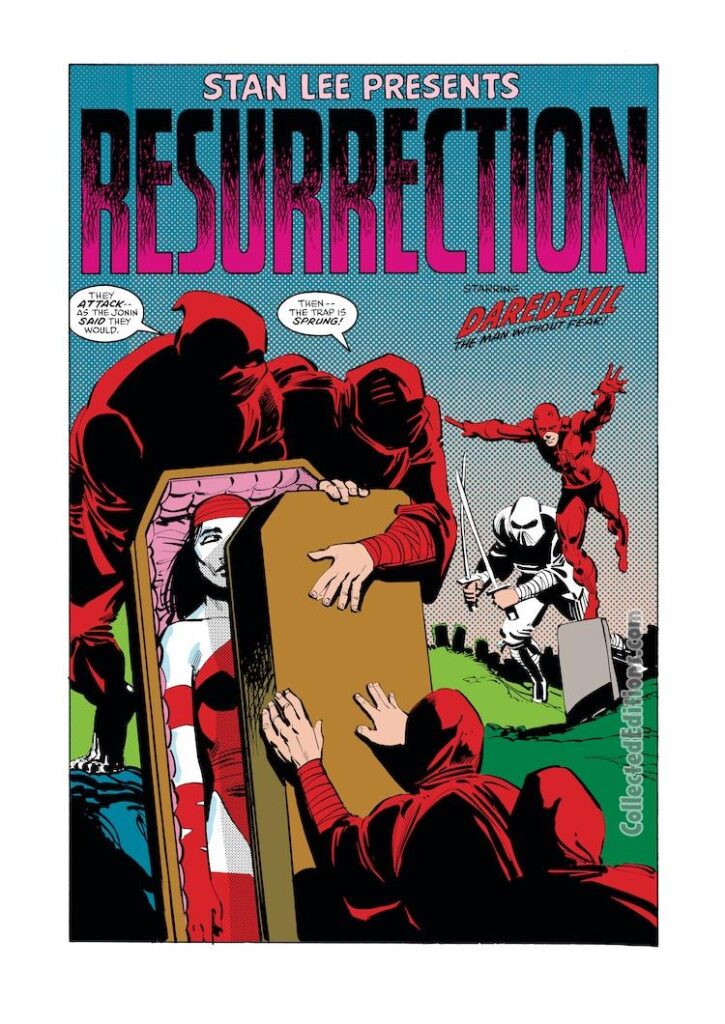
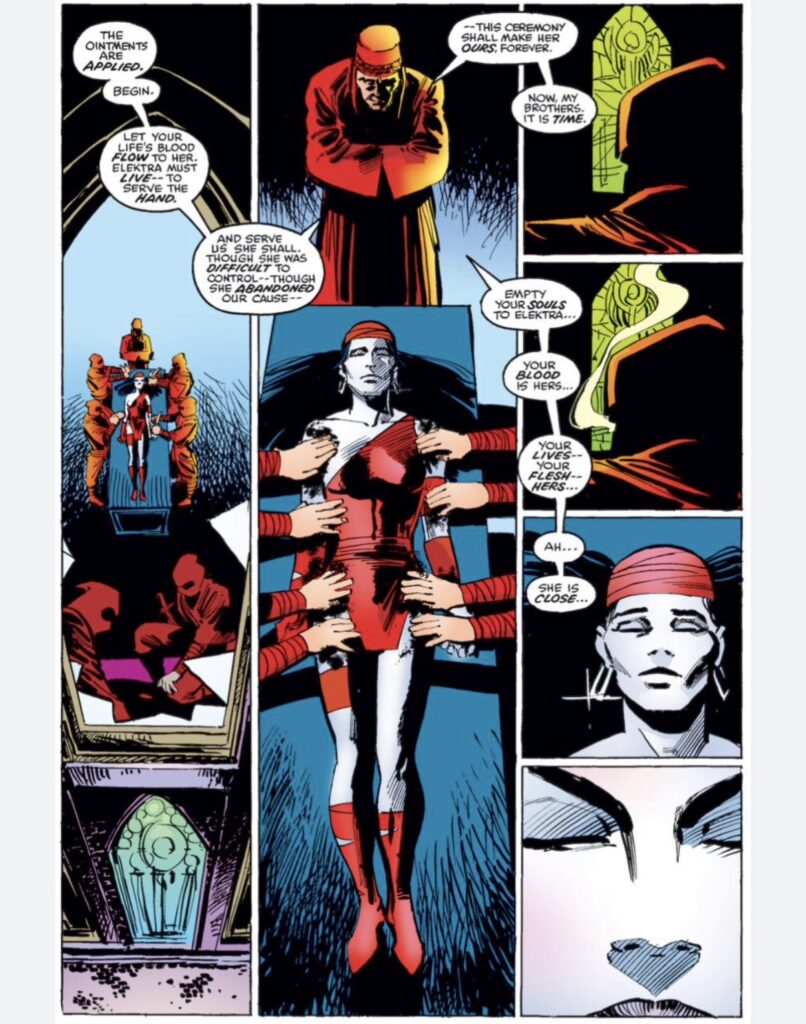
Frank Miller’s graphic novel Born Again gets a mention during Townes and Sam’s conversation — a deliberate choice. Born Again is the story of a man dismantled piece by piece until there is almost nothing left, and then — painstakingly, against enormous odds — rebuilt. The reference hangs in the air of the episode like a question: is that what is happening here? Is any of this dismantling in service of something that comes after?
The Uniform and the Hunger for More
Amid all the darkness, the episode gives Henry a moment of stillness that functions almost like a window opening.
She is at work at Surf’s Up, tired, grinding through a shift, when she looks up and takes in the room around her. Her coworkers — every race, every background, people from entirely different corners of the world — are all wearing the same uniform. They are all exhausted. They are all doing the same repetitive labor for the same inadequate wages, their individuality flattened into interchangeable productivity.
Henry sees herself in them. And something in that recognition refuses to sit still.
She does not say anything. She does not make a speech or a decision. But the look on her face is unmistakable. The episode is telling us, without dialogue, that Henry has begun to understand something important: she has a power unlike anything the world has seen, and she is spending her days in a polo shirt asking people if they want extra toppings. Whatever she was before this ability arrived, she is not going to be able to be that anymore. The uniform doesn’t fit her the way it used to.
The Meeting That Fails Everyone
The Townes-and-Sam meeting, for all the hope riding on it, collapses cleanly and completely.
Townes came looking for information that could genuinely help Henry — something to help her understand her power, understand Cleartech, understand the danger she is in. Sam came with a very different agenda: he wants Henry to use her teleportation to move him off the grid. He wants what she can do, not what she needs.
Neither gets what they came for.
Townes reaches a conclusion in the aftermath that the episode treats with genuine weight, because it costs him something to arrive there. He is, by any measure, exceptional — a mind that processes the world in patterns and connections that most people cannot access. And it is not enough. Sam will not share critical information without getting what he wants in return. Townes cannot force it out of him and cannot replicate it independently.
The brutal irony is this: the extraordinary power that defines Henry’s life might also be what ends it. The people who want to help her don’t have enough. The people who have enough don’t want to help her — they want to own her. And somewhere in that gap, Cleartech operates. Patient. Invisible. Waiting.
The Geography of Fear
The episode closes on an idea that has been building in the background all hour: safety is the prerequisite for freedom.
To master teleportation, you cannot simply decide to control it. You must return to the origin of the fear. You must go back to the truck, or the church, or whatever place split your life into before and after — and you must stay there long enough to stop feeling like you are going to die. That is not a metaphor. That is the literal mechanism. The body must learn, at the cellular level, that the danger has passed.
Once it does, the limits dissolve. Henry discovers this herself. When the fear no longer controls her, the power stops being a reflex and becomes a choice. And the scope of it expands beyond anything she had imagined — not only can she teleport anywhere she wants, but she can take things with her. People. Objects. A truck.
The girl who could barely force herself to stand next to a parked vehicle can now carry the whole thing through space.
The line being crossed in this episode is not only the legal or moral lines that the plot traces with such care. It is the internal line between what fear lets you be and what you become when you finally walk through it.
Henry is beginning to cross it. The question the episode leaves hanging in the dark — quiet, patient, and deeply unsettling — is who else is watching her get there.